

How scenes should be directed ?
Neuroscience in Filmmaking

Neuroscience in Filmmaking
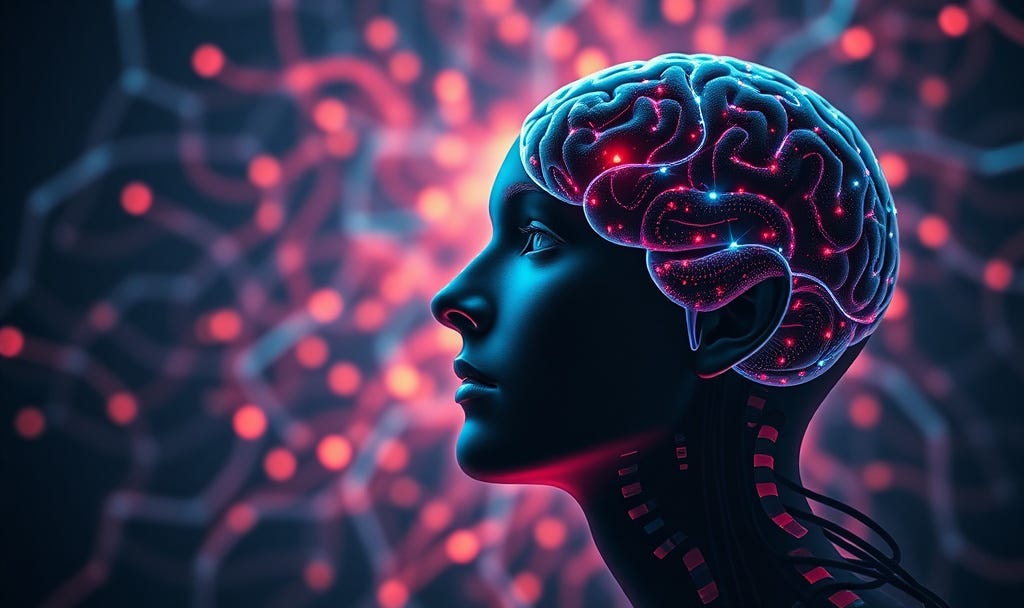
Your audience doesn’t watch films. Their brain does.
Most filmmakers spend years studying lenses, lighting, screenplay structure, character arcs and editing.
Very few study the organ they’re actually making films for.
The human brain.
Once you understand how the brain experiences a scene, filmmaking becomes less mysterious. You stop asking, “Will this scene work?” and start asking a far better question:
“Is this scene aligned with how the brain naturally processes experience?”
That single shift changes everything.
One realization transformed the way I direct.
The brain doesn’t process a film in the order most filmmakers write one.
It doesn’t begin with meaning.
It doesn’t begin with dialogue.
It doesn’t begin with logic.
It begins with sensation.
Then emotion.
Only then does it search for meaning.
That sequence is not a storytelling preference.
It’s neuroscience.
And the brain refuses to negotiate it.
The brain’s hidden screenplay
Every scene your audience experiences follows the same neurological chain.
First: What is happening?
The sensory system wakes up.
Light changes.
Movement appears.
A door slams.
A face turns.
A shadow crosses the frame.
The brain isn’t asking what any of this means.
It’s simply detecting change.
Change is attention.
No change...
No attention.
This is why the first few seconds of a scene matter so much. Before your audience can care, the brain has to notice.
Second: Should I care?
Now the emotional brain takes over.
The amygdala isn’t interested in clever dialogue.
It wants to know one thing:
Is this dangerous? Valuable? Painful? Desirable?
Emotion assigns value before logic ever arrives.
That’s why a trembling hand often says more than a page of exposition.
That’s why silence can become louder than dialogue.
And that’s why audiences remember loss long after they’ve forgotten explanations.
Finally: What does this mean?
Only now does the thinking brain arrive.
It builds explanations.
Creates themes.
Interprets choices.
Judges morality.
Connects events.
Ironically, what we call “understanding the story” is actually the last stage of the experience.
The audience feels first.
They think second.
They justify last.
This changes how scenes should be directed
Many scenes fail because they begin where the brain finishes.
Characters explain.
They discuss.
They debate.
They tell us exactly how they feel.
But nothing has happened that deserves those words.
The audience receives information.
Not experience.
And information rarely survives.
Experience does.
Every memorable scene I’ve studied follows the same neurological progression.
Sensory ignition.
Something changes.
A glance.
A sound.
A movement.
A silence.
Attention locks.
Emotional valuation.
Something is at stake.
Not intellectually.
Personally.
Someone may lose love.
Trust.
Identity.
Freedom.
Life.
The audience begins feeling before they fully understand why.
Cognitive interpretation.
Only after emotion is established does meaning emerge.
Dialogue becomes confirmation, not explanation.
The audience assembles the puzzle themselves.
Meaning discovered is always stronger than meaning delivered.
Residue.
The best scenes don’t end.
They echo.
A held close-up.
An unanswered question.
An empty chair.
A door left open.
Silence.
Memory isn’t created by closure.
It’s created by unfinished emotional business.
Why some films stay with us for decades
The brain isn’t designed to remember information.
It’s designed to remember significance.
A perfectly written speech disappears.
A single look between two characters can survive for decades.
Because the emotional brain decides what deserves storage.
Not the intellectual one.
This is why cinema is fundamentally different from literature.
Film isn’t simply visual storytelling.
It’s sensory engineering.
A question I ask before every scene
I’ve started using four simple questions during development.
What immediately captures attention?
What emotional loss is possible?
What realization emerges?
What lingers after the cut?
If I can’t answer those four questions clearly, the scene usually isn’t finished.
Not because the writing is weak.
Because the brain has nowhere to travel.
The real job of a filmmaker
We often think we’re directing actors.
Or cameras.
Or editing performances.
We’re doing something deeper.
We’re guiding electrical activity inside another human brain.
Every cut changes attention.
Every frame changes perception.
Every silence changes physiology.
Every performance changes memory.
That’s an extraordinary responsibility.
Perhaps that’s why great cinema feels universal.
It isn’t speaking to culture.
It isn’t speaking to language.
It’s speaking directly to biology.
And biology hasn’t changed in thousands of years.
Remember this one sentence:
The sensory brain notices. The emotional brain decides. The thinking brain explains.
Ignore that order, and the audience disconnects.
Respect it, and your scenes stop feeling written.
They start feeling lived.
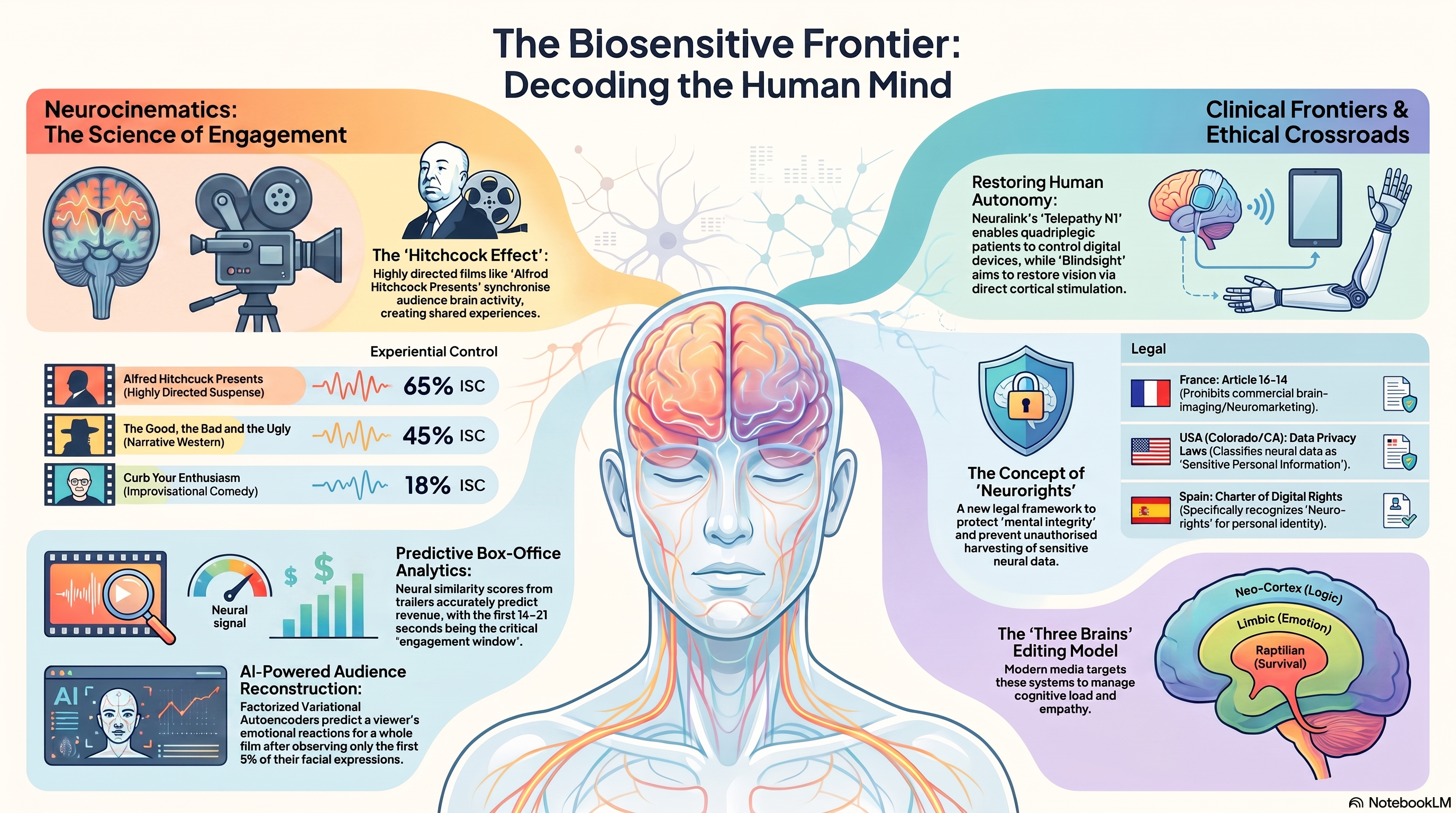
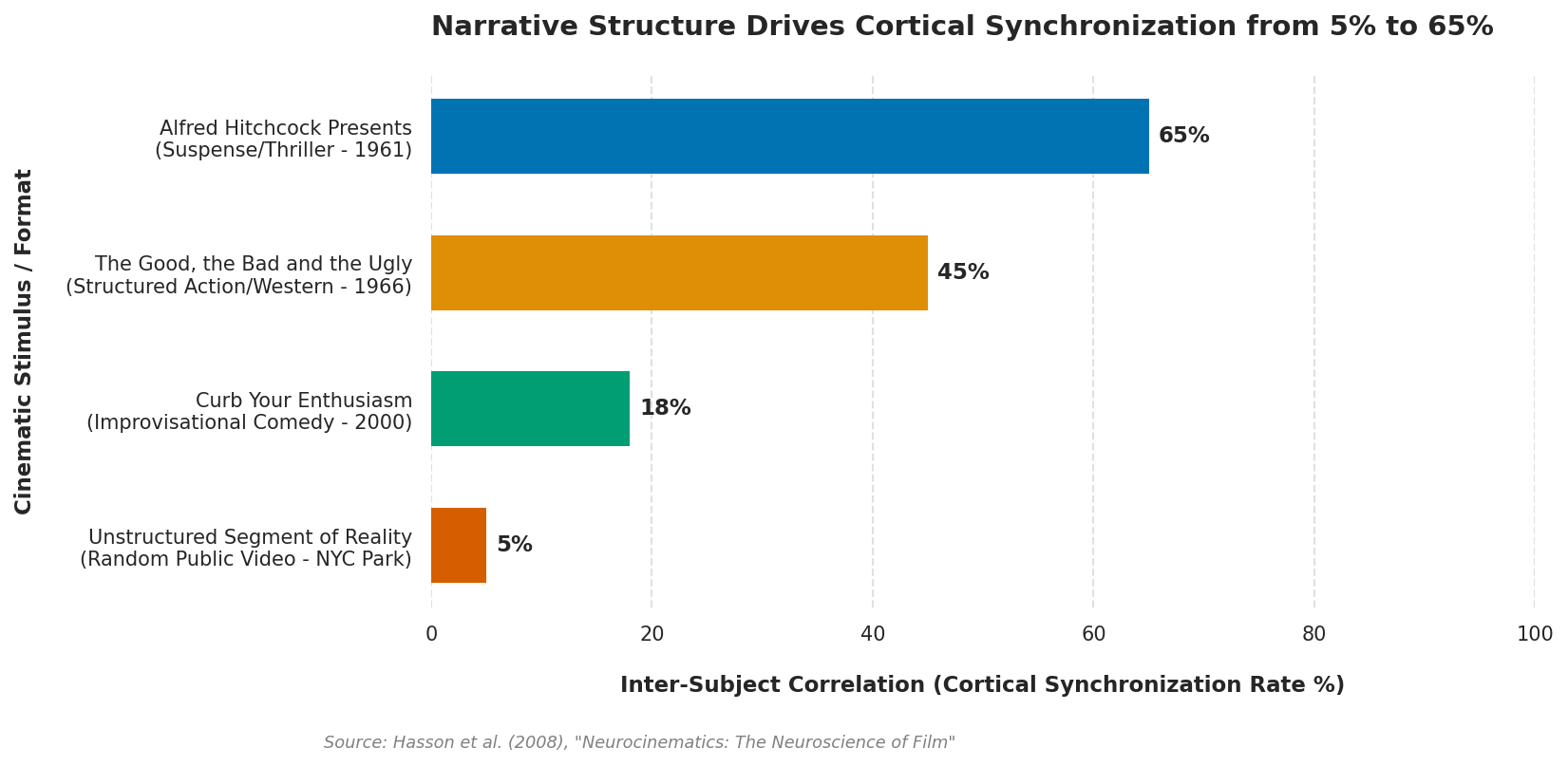
In the coming weeks, I’ll explore how the brain influences every major filmmaking decision, including:
The Neuroscience of Suspense — Why uncertainty creates tension, how anticipation is neurologically stronger than surprise, and why Hitchcock’s famous bomb-under-the-table example still works.
The Neuroscience of Editing — How cuts, rhythm, eye movements, attention shifts, and temporal perception determine whether an edit feels invisible, energetic, or emotionally overwhelming.
The Neuroscience of Character Empathy — Why audiences emotionally invest in fictional people, the role of mirror neurons, facial micro-expressions, vulnerability, and how empathy is built long before dialogue explains a character.
Cinema has always been described as an art.
It is.
But it is also applied neuroscience.
The more we understand how the human brain sees, feels, remembers, and assigns meaning, the more intentional—and more powerful—our filmmaking becomes.
Because every great film is ultimately made twice:
Once on the screen.
And once inside the audience’s mind.
Nobin Kurian
Director | Executive Producer